


Flashbacks are a powerful tool in any writer’s arsenal. They add depth, reveal hidden truths, and occasionally make us gasp, “Wait, WHAT just happened?” These narrative time machines transport readers into the past, enriching the story in the present.
But let’s be real: flashbacks can also go horribly wrong. Done poorly, they can confuse readers or derail your story faster than a runaway train. This is where skillful execution comes in, turning a flashback into a seamless and meaningful addition to your narrative instead of a clunky interruption.
In this article, we’ll explore how great writers in literature (and film!) have used flashbacks to dazzling effect. We’ll also give you tips on crafting flashbacks that captivate readers while keeping your plot on track.
Ready to rewind time and take notes? Let’s go.

Take a free trial of Fictionary today and take your story to the next level.
What Is a Flashback?
A flashback is the narrative equivalent of time travel. It’s when a story takes a detour into the past, revealing events that happened before the current timeline. Flashbacks are a writer’s tool to fill in gaps, deepen characters, and drop those juicy revelations that make readers’ jaws hit the floor.
At its core, a flashback is all about context. Why is the villain so obsessed with revenge? What’s the deal with the protagonist’s fear of water? Flashbacks answer these questions by pulling back the curtain on events that shaped the characters or the story world.
When done right, flashbacks feel like an organic part of the narrative, seamlessly weaving the past into the present. They provide readers with that satisfying “aha!” moment, rather than leaving them disoriented and wondering, “Wait, what’s going on?” But flashbacks are about more than just plugging in pieces of backstory to fill gaps in understanding. They are a versatile narrative tool that can elevate your story on multiple levels.
A well-executed flashback can deepen the emotional impact of your narrative. By offering a glimpse into a character’s past, it allows readers to connect more intimately with their current struggles.
For example, the reader might see how a traumatic event in childhood shaped the protagonist’s reluctance to trust others. This added layer of context not only enriches the character but also makes their journey more poignant and relatable. The stakes feel higher because the reader understands what’s truly at risk for the character.
Flashbacks can also serve as a tool for building suspense. By strategically withholding key information and revealing it through flashbacks, you can keep readers guessing and heighten the tension in your story. Maybe a character’s motivations remain unclear until a pivotal moment when a flashback unveils the haunting secret they’ve been carrying. Done skillfully, this approach turns flashbacks into a driving force that propels the story forward rather than stalling it.
Beyond enriching characters and plot, flashbacks can illuminate the broader themes of your story. Dipping into the past offers a chance to explore universal ideas like redemption, loss, or personal growth.
A flashback might revisit a character’s moment of failure, setting the stage for their ultimate redemption arc in the present. Or it could show how a character coped with loss in the past, drawing a parallel to their current circumstances and highlighting their emotional evolution. By tying past events to the larger themes of your story, flashbacks can add resonance and depth to your narrative.
Ultimately, flashbacks aren’t just a narrative detour—they’re a powerful tool to enrich your storytelling. When carefully placed and thoughtfully crafted, they enhance emotional connection, intrigue, and thematic exploration, ensuring your readers stay invested from beginning to end.
But flashbacks can be tricky. They run the risk of pulling readers out of the story, especially if they’re overused or poorly placed. Worse, they can come across as info dumps—essentially, long stretches of exposition disguised as a flashback.
The key to a great flashback is making it essential to the story at that point in time. If your flashback doesn’t change how the reader sees the character or the plot, you might want to rethink it. For a deeper dive into crafting impactful flashbacks, check out this guide on flashback story elements by Fictionary. It’s packed with insights to ensure your flashbacks are a seamless and essential part of your narrative.

Examples of Flashbacks in Literature
Flashbacks are literary gold when handled well. They allow authors to reveal backstory, build suspense, and tug at our heartstrings—all without derailing the main narrative. This narrative tool offers a unique opportunity to deepen characters, provide essential context, or create dramatic tension that keeps readers turning the pages.
From peeling back the layers of a protagonist’s past to unveiling secrets that reshape the present, flashbacks can serve as turning points that redefine the trajectory of a story. Here are some standout examples of flashbacks in literature, each demonstrating how this device can elevate a story when used with care and creativity.
To Kill a Mockingbird by Harper Lee
Harper Lee uses flashbacks as the foundation of her novel. The adult Scout Finch reflects on her childhood in Maycomb, Alabama, weaving memories of innocence and moral awakenings into the larger narrative.
Through Scout’s flashbacks, we see the trial of Tom Robinson, her relationship with her father, Atticus, and the subtle yet profound lessons she learns about justice and empathy. These past moments enrich the reader’s understanding of the present-day Scout’s perspective.
Beloved by Toni Morrison
In Beloved, Toni Morrison masterfully uses flashbacks to explore the trauma of slavery. Sethe’s memories of Sweet Home plantation and her harrowing escape unfold like pieces of a puzzle, revealing her devastating choice to kill her child rather than see her enslaved.
These flashbacks are the heartbeat of the novel, forcing readers to confront the lingering scars of history alongside the characters.
One Hundred Years of Solitude by Gabriel García Márquez
Márquez’s masterpiece plays with time in dizzying, magical ways, using flashbacks to illustrate the cyclical nature of the Buendía family’s history. Events from past generations are relived and reinterpreted, creating a sense of destiny and inevitability.
These flashbacks aren’t just narrative devices—they’re intrinsic to the book’s themes of repetition and the passage of time.
The Great Gatsby by F. Scott Fitzgerald
Nick Carraway’s narrative in The Great Gatsby is laced with flashbacks, most notably as he recounts Jay Gatsby’s rise from a poor Midwestern boy to a mysterious millionaire.
These moments are pivotal for understanding Gatsby’s obsession with Daisy and his relentless pursuit of the American Dream. Fitzgerald’s flashbacks enrich the narrative while maintaining an air of mystery around Gatsby’s larger-than-life persona.
Harry Potter and the Half-Blood Prince by J.K. Rowling
Through the Pensieve, Rowling uses flashbacks to delve into Voldemort’s past, offering readers glimpses of Tom Riddle’s early life and descent into darkness.
These scenes are crucial for understanding his motivations and the creation of the Horcruxes, tying the past to Harry’s present-day quest to defeat him. The flashbacks also highlight Rowling’s skill in seamlessly integrating backstory into an active plot.
Wuthering Heights by Emily Brontë
Brontë’s Wuthering Heights employs a complex narrative structure, with much of the story told through flashbacks recounted by Nelly Dean.
These flashbacks chronicle the passionate and destructive relationship between Heathcliff and Catherine, revealing how their choices echo across generations. The layered storytelling adds depth and emotional resonance to the novel’s gothic themes.
Slaughterhouse-Five by Kurt Vonnegut
Vonnegut’s novel famously uses a nonlinear structure, with protagonist Billy Pilgrim “unstuck in time.” His flashbacks (and flash-forwards) to his experiences during World War II and beyond mirror the disorienting effects of trauma.
These fractured glimpses into the past create a haunting meditation on the nature of memory and the futility of war.
The Kite Runner by Khaled Hosseini
Hosseini uses flashbacks to show the childhood friendship—and betrayal—between Amir and Hassan. These past events, set against the backdrop of a changing Afghanistan, are critical for understanding Amir’s guilt and his eventual journey toward redemption.
The flashbacks are deeply emotional, grounding the story in themes of loyalty, sacrifice, and atonement.
The Night Watchman by Louise Erdrich
Erdrich uses flashbacks to illuminate the lives of her characters, particularly Thomas Wazhashk, a night watchman based on the author’s grandfather. These moments reveal the historical and personal struggles of Native American communities resisting the Termination Bill in 1953. The flashbacks bring depth to Thomas’s character, connecting his past experiences to his fight for his people’s rights, while also grounding the novel in historical realities.
Circe by Madeline Miller
Miller’s retelling of Greek mythology centers on the sorceress Circe, weaving flashbacks into her narrative to explore her formative experiences with gods, mortals, and monsters. Through these recollections, we see Circe’s relationships with figures like Daedalus and Odysseus, as well as her struggles with loneliness and power. The flashbacks serve as windows into her transformation from an overlooked daughter of Helios to a figure of immense strength and self-discovery.
Movies with Flashbacks
Inception
Christopher Nolan’s Inception uses flashbacks to reveal the emotional backstory of its protagonist, Dom Cobb. These moments delve into Cobb’s relationship with his late wife, Mal, and their life together in the dream world. The flashbacks are critical to understanding Cobb’s guilt and motivations, while also adding layers of complexity to the film’s dream-within-a-dream structure. They blend seamlessly into the narrative, keeping the audience on edge as they question what’s real and what’s a memory.
Gone Girl
David Fincher’s adaptation of Gillian Flynn’s Gone Girl utilizes flashbacks through Amy Dunne’s diary entries. These scenes paint a picture of her seemingly perfect marriage, contrasting starkly with the present-day investigation into her disappearance. As the truth behind the diary is revealed, the flashbacks take on a sinister tone, showcasing how they can be used to mislead both the characters and the audience.
Coco
Pixar’s Coco employs flashbacks as emotional anchors in its exploration of family and memory. As Miguel journeys through the Land of the Dead, flashbacks reveal the backstory of his great-great-grandfather, Héctor, and the betrayal that led to his estrangement from the family. These moments enrich the narrative, culminating in a heartwarming resolution that ties the past and present together beautifully.
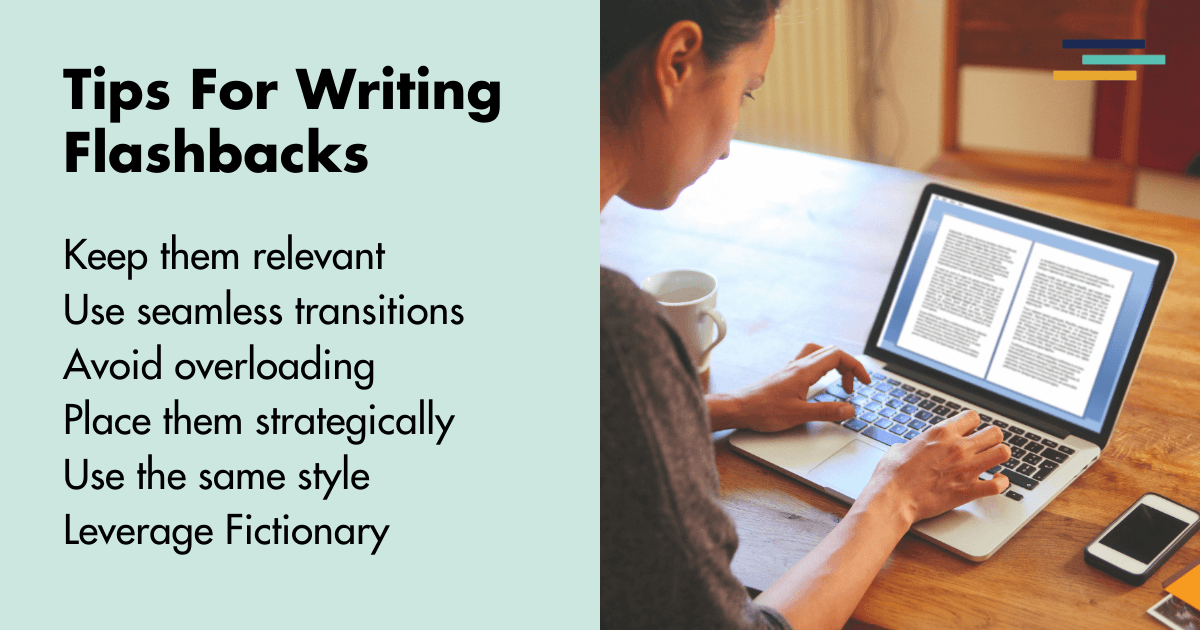
Tips For Writing a Flashback
Flashbacks can be a game-changer for storytelling—when done well. They reveal backstory, deepen characters, and add layers of complexity to your narrative. But there’s a fine line between a compelling flashback and one that confuses or disengages readers. Here’s how to nail it.
- Keep It Relevant: Every flashback should have a clear purpose. Does it enhance the reader’s understanding of the character or plot? If not, consider cutting it. A great flashback should feel indispensable, like a puzzle piece snapping into place.
- Use Seamless Transitions: The best flashbacks flow naturally, triggered by an object, sound, or memory. For example, a character finding an old photograph can effortlessly segue into a flashback, keeping the narrative smooth and engaging.
- Avoid Overloading: Flashbacks are like seasoning—use sparingly. Overloading your story with too many flashbacks can slow the pace or confuse readers. Keep them concise and focused on revealing just enough to intrigue.
- Place Them Strategically: Timing is everything. Introduce flashbacks after readers have connected with the character or when they’ll raise the stakes. Dumping a flashback too early or during high action can disrupt the flow.
- Write in the Same Style: Keep the tone and voice consistent with your main narrative. Sudden stylistic changes can jar the reader. Use vivid sensory details to immerse readers in the past while maintaining the story’s overall vibe.
- Leverage Fictionary: Use Fictionary’s StoryCoach to analyze your flashbacks. It can help you assess their relevance, placement, and flow, ensuring they enhance your story instead of dragging it down. StoryCoach is like having a guide to make your flashbacks seamless and impactful.
Flashbacks are a storytelling powerhouse when used thoughtfully. They have the potential to add depth, intrigue, and emotional resonance, transforming a good story into an unforgettable one. Whether you’re crafting a poignant memory for your protagonist or building suspense with a hidden truth, the key is to make every flashback purposeful and impactful. A well-placed flashback can reveal the inner workings of your characters, deepen the narrative, and provide readers with those delicious “aha!” moments that keep them hooked.
Of course, executing flashbacks effectively requires finesse. They must integrate seamlessly into the story’s flow, feeling like an organic part of the narrative rather than a jarring interruption. To achieve this, it’s crucial to consider their placement, content, and timing. A flashback should arrive when it matters most, offering information that shifts the reader’s understanding of the characters or plot in a meaningful way.
For tips on how to master this delicate balance, this guide on writing flashbacks by Fictionary is an excellent resource. It delves into the intricacies of crafting flashbacks that enrich your story while keeping readers engaged.
With tools like Fictionary’s StoryCoach, you can refine your narrative structure, ensuring your flashbacks enhance your story rather than distract from it. By analyzing how a flashback fits into the larger framework of your plot and character arcs, you can make confident, strategic choices about when and how to use this powerful tool.
The past isn’t just backstory; it’s the foundation of the present. A well-crafted flashback doesn’t just tell readers what happened—it shows them why it matters. Use it wisely, and your readers will be hooked from beginning to end.